Treatment of Salivary Gland Cancer in Germany
Germany is one of the countries that pride themselves on advanced medical treatments, care. People also travel to the country seeking innovative techniques and systematic treatment. This article will give additional information concerning salivary gland cancer treatment inGermany, from diagnosis to rehabilitation.
What is salivary gland cancer?
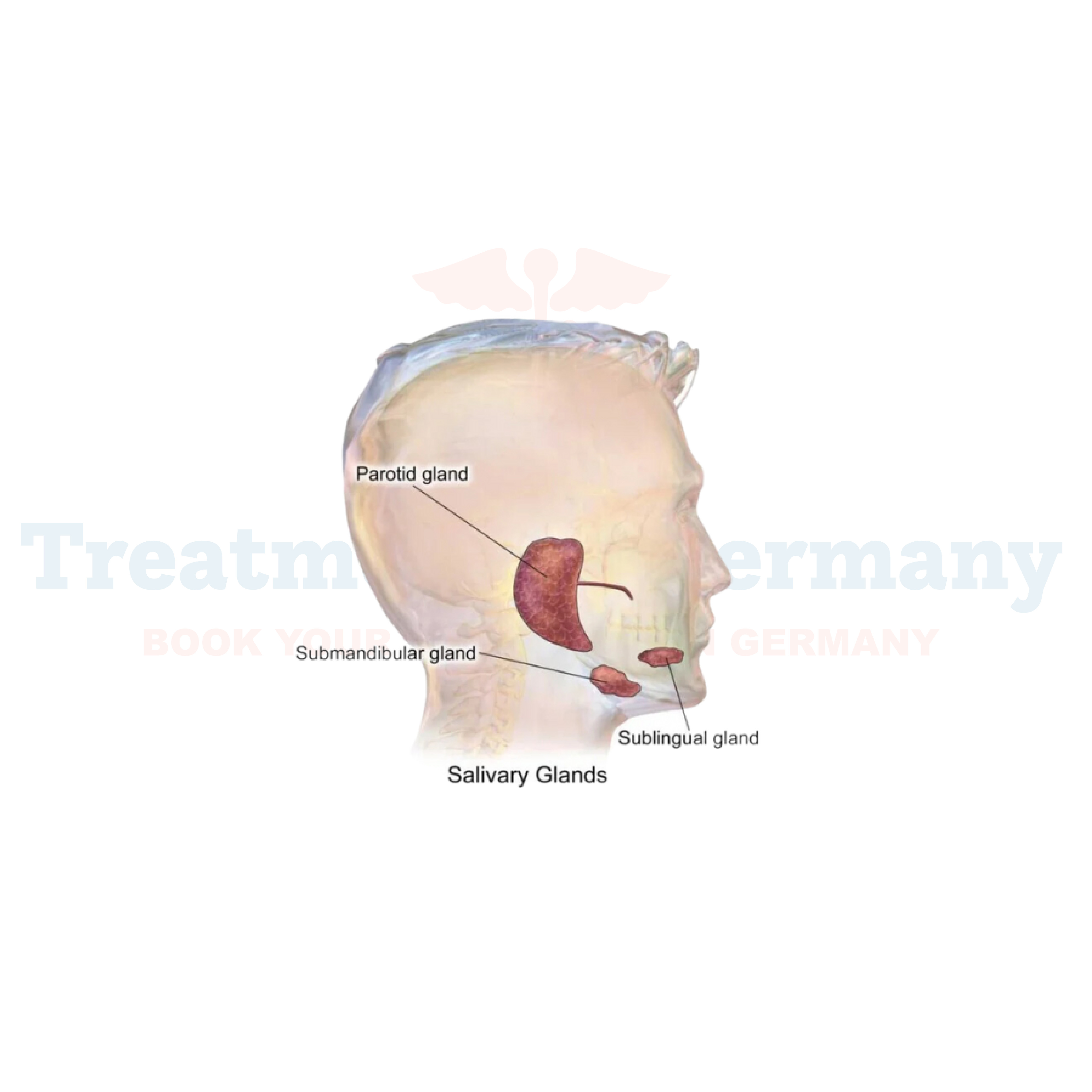
Salivary gland cancer defines the process of development of malignant tumors in the salivary gland, which is very important for producing saliva that allows the digestive system to function.
It affects three major salivary glands: the salivary glands, submandibular salivary glands, and sublingual salivary glands, in addition to a few minor salivary glands.
Although most of these tumors are benign, some of them become cancerous and metastasize to other parts of the body, for example, the head and neck region. This cancer can also occur at old ages and assigned male at birth (AMAB) is at a higher risk.
There exist different forms of salivary gland
cancer, and each has a different impact on the body. The most common forms
include:
- Mucoepidermoid carcinoma: It primarily
occurs in the parotid salivary glands, though it frequently also involves other
salivary glands.
- Adenoid cystic carcinoma: This tumor is
slow-growing, yet it may infiltrate into surrounding nerves and cause pain or
facial paralysis. It can even recur or spread, typically to the lungs. It may
cause swelling or pain of the face.
- Parotid glands: Primary site of acinic cell
cancer. It may cause swelling or pain of the face.
- Adenocarcinoma: It is an aggressive form of
salivary gland cancer that occurs rarely. It may grow in any of the salivary
glands and often requires surgery along with radiation.
Each of the diverse tumors behaves differently, and treatment depends on the nature of the tumor.
Diagnosis is extremely central to cancer
treatment. Present diagnostic tests are used by physicians in Germany.
- Physical examination: nodules, numbness, or
tenderness of your face or jaw.
- CT scan: Allowing an unambiguous view of the
tumor.
- MRI: providing clear imaging of soft
tissues.
- PET: That will help in determining whether
the cancer has spread.
- Biopsy: The tumor sample is taken by a
pathologist to study whether the tumor is malignant.
- Staging of cancer: The extent of the tumor
and its expansion to the lymph nodes.
Early detection allows for better cure results. In Germany, doctors ensure more penetrating tests like biopsy and CT scans wherein the cancer is identified before it spreads within the body.
Best Hospitals for
Salivary Gland Cancer Treatment in Germany
- Universitätsklinikum Freiburg
- Ludwig Maximilian University Hospital
- Charité University Hospital
These are considered among the best in Germany, with excellent and quality facilities to treat salivary gland cancer.
These hospitals have specialized departments for head and neck cancers and are equipped with the latest technology to deliver individualized plans of treatment.
Germany is known for its cutting edge
treatment modalities. Besides surgery, newer treatments are immunotherapy and targeted
therapies.
Surgery is the first line of treatment and the
main way that the tumor is removed.
- Chemotherapy: While at advanced levels,
chemotherapy becomes a treatment for the disease.
- Radiation therapy: In recent years, newer
mechanisms like intensity-modulated radiation therapy, also known as Intensity-modulated
radiation therapy (IMRT) have come into the picture that offer maximum
accuracy.
Dendritic Cell Therapy
Dendritic cell therapy is a groundbreaking form of immunotherapy aimed at activating the patient’s immune system to identify and attack salivary gland cancer cells.
- Dendritic cells are collected from the patient’s blood and modified in the laboratory.
- These cells are trained to recognize tumor-specific antigens.
- The activated dendritic cells are injected back into the patient to stimulate an immune response.
- Non-invasive and well-tolerated with minimal side effects.
- Effective for advanced or recurrent cases where traditional treatments may fail.
- Personalized and tailored to the patient’s immune system and tumor profile.
- German hospitals lead the way in immunotherapy, offering cutting-edge research and highly skilled specialists in dendritic cell therapy.
Hyperthermia Therapy
Hyperthermia therapy is often used in conjunction with radiation or chemotherapy to enhance their effectiveness in treating salivary gland cancer.
- Localized heat is applied to the tumor site, increasing the temperature of cancerous tissues to 41–43°C.
- The heat damages the tumor cells while improving the effectiveness of chemotherapy drugs and radiation.
- Reduces tumor resistance to other treatments.
- Enhances blood flow, improving drug delivery to the tumor.
- Minimally invasive and painless.
- German hospitals utilize advanced hyperthermia technology, ensuring precise application and optimal outcomes.
Proton Beam Therapy
Proton beam therapy is a precise and advanced form of radiation therapy ideal for treating salivary gland cancer, particularly when tumors are located near sensitive structures.
- Proton beams are directed at the tumor, delivering radiation to cancer cells while sparing healthy tissue.
- This approach allows for a higher dose to the tumor with fewer side effects.
- Reduces radiation exposure to healthy tissues and critical areas.
- Ideal for treating tumors in the head and neck region, where precision is crucial.
- Effective for both primary and recurrent cancers.
- Proton therapy centers in Germany are equipped with state-of-the-art equipment and managed by experienced specialists.
Targeted Therapy
Targeted therapy focuses on specific molecular changes or genetic mutations in salivary gland cancer cells.
- Drugs are designed to block specific proteins or pathways critical to tumor growth and survival.
- These therapies are often used when the cancer is advanced or resistant to traditional treatments.
- Minimizes damage to healthy cells, resulting in fewer side effects.
- Highly effective for cancers with identifiable mutations.
- Often administered orally or through intravenous infusions.
- German oncologists perform genetic profiling to customize treatment plans based on the tumor’s unique characteristics.
Rehabilitation after Treatment of Salivary Gland Cancer
Following therapy, rehabilitation is a crucial
step toward complete recovery. German hospitals implement general plans:
- Physical rehabilitation: regaining functional
competency after surgeries in the areas of the jaw and face.
- Speech therapy: Helps regain speech functions,
which is especially important after surgery on the tongue.
The patients are provided with psychological counseling to alleviate the emotional impact of the cancer treatment. Most hospitals provide long-term mental health counseling. The patients are encouraged to fend off anxiety and depression.
The German Expense of Salivary Gland Cancer Treatment
The treatments given to salivary gland cancer patients in Germany are of great quality and efficiency, and it depends on the seriousness of the case and what is the surgery going to cost, not to mention the additional treatments such as radiotherapy or proton therapy added to it.
Leading German Hospita ls for Treatment of Salivary Gland Cancer
The best hospital for salivary gland cancer
treatment in Germany includes:
- The University Hospital of dMunich has the
high-tech infrastructure and the best cancer research center
- Helios Hospital Berlin-Buch: Best score for
successfully treating cancerous malignancies
- University Hospital Frankfurt am Main:
Great research and clinical care to treat head and neck cancers
Why Prefer Germany for treatment of Salivary Gland Cancer?
Germany ranks as one of the best destinations for salivary gland surgery due to its excellent healthcare system, very experienced surgeons, and up-to-date medical technology.
In Germany, innovative treatments are provided to patients, which are unavailable in many other countries.
Important Benefits of Cancer Treatment in Germany
There are numerous advantages of cancer
treatment in Germany:
- Innovation: Ongoing research in the field of
cancer treatment.
- High survival rates: Plenty of success in
the treatment of cancer of the salivary gland due to early detection.
- Multidisciplinary treatment: The treatment protocol includes not only specialists from the departments of oncology and radiology but also surgery.
Frequently Asked Questions:
What are the most frequent symptoms of salivary gland cancer?
Salivary gland cancer often manifests itself as a painless swelling in the neck or jaw, and there is also numbness or pain in the face; other symptoms may include dysphagia or an inability to move facial muscles.
How is salivary gland cancer diagnosed?
It typically begins with physical examination and images, for instance, CT scans and MRIs, to confirm the existence of cancerous cells through biopsy.
What are the treatment options for salivary gland cancer in Germany?
Some of the treatments offered in Germany range from surgery and radiation to advanced interventions such as immunotherapy and targeted therapy, so that thorough care is guaranteed.
What is the cost of salivary gland cancer treatment in Germany?
The cost of treatment in Germany depends upon the procedure, whereas surgery generally accounts for the largest share of expenditure. Other forms of treatment, such as radiation or chemotherapy, may add to overall costs if the case has unique conditions.
Can salivary gland cancer be subjected to chemotherapy?
Yes. Chemotherapy is applied when the spread of the tumor has happened or in advance stages of the disease. Chemotherapy can be administered along with other therapies, radiation therapy in particular.
👉 Contact us for further information and receive a complimentary consultation.
Ask about Salivary Gland Cancer
Tell us about your case and we will advise on next steps for treatment in Germany.
.webp)
.webp)
 (1).webp)
 (1).webp)